Chiloé's native potato and the architecture born from it
An island where one of the four crops feeding the world was domesticated, and the building types that crop invented: the shed, the seed rack, the troja, the almud.
Of the 80,000 edible plant species that exist, we cultivate about 300. Only four sustain the world's food supply: rice, maize, wheat and potato. One of them was domesticated on an island in southern Chile.
Through 2014 I wrote my architecture thesis about it. I spent months on Chiloé studying native potatoes, talking with farmers and measuring storage sheds, and ended up finding something I wasn't looking for: an entire architecture that exists because of a tuber.
This article is that research, told without the thesis format. The project that came out of it I tell in a centre for the native potato in Chonchi.
Chiloé, where the potato began
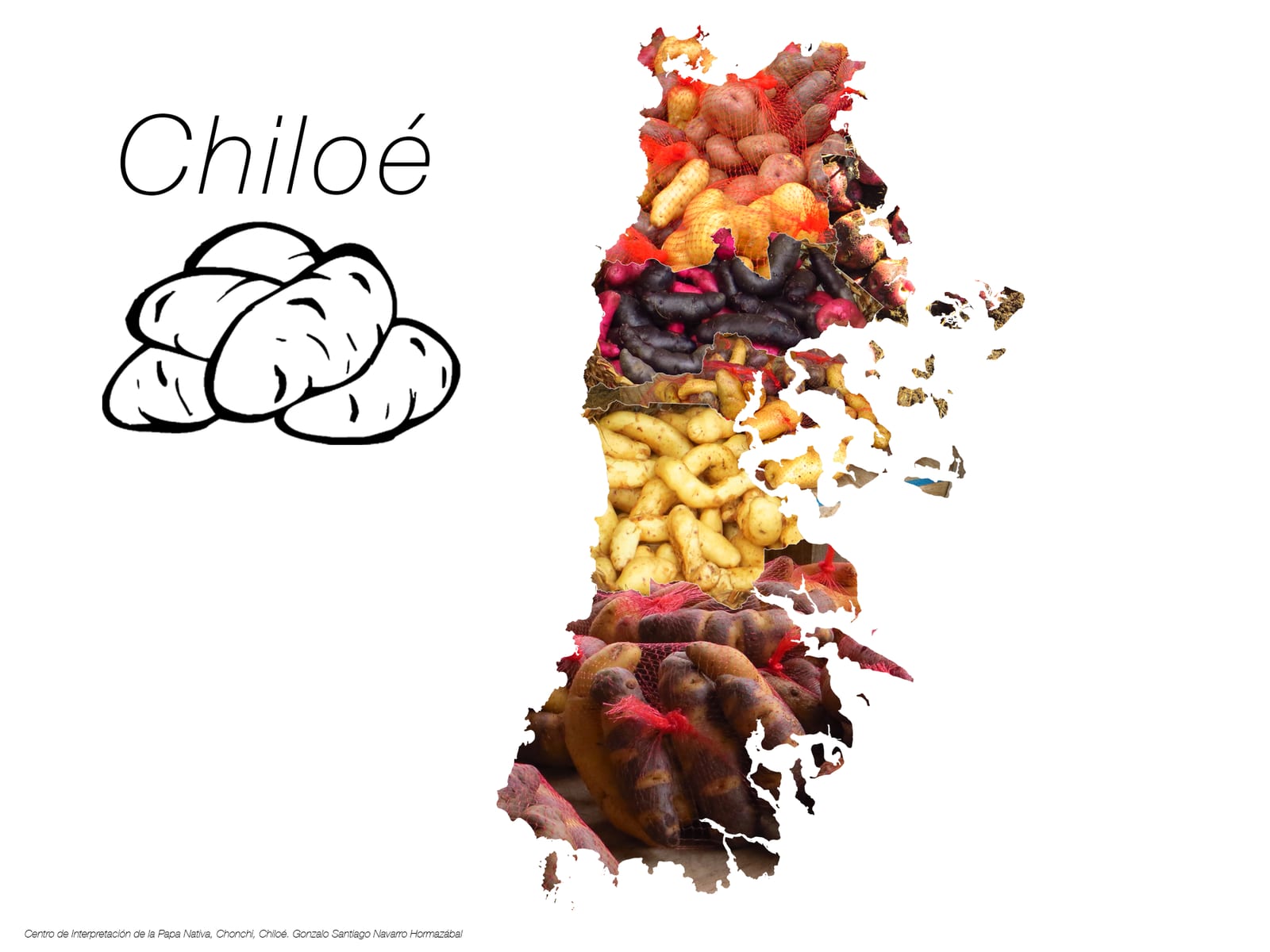
Chiloé is known for its churches, its stilt houses and its myths. Much less for this: it is one of the centers of origin of the potato, and when the Spanish arrived more than a thousand native varieties were cultivated there, in the most diverse shapes, colors, textures and flavors.
Most potatoes eaten in the world today descend from genetic material that passed through that archipelago. It sounds like local exaggeration until you check where the varieties grown in Europe came from.
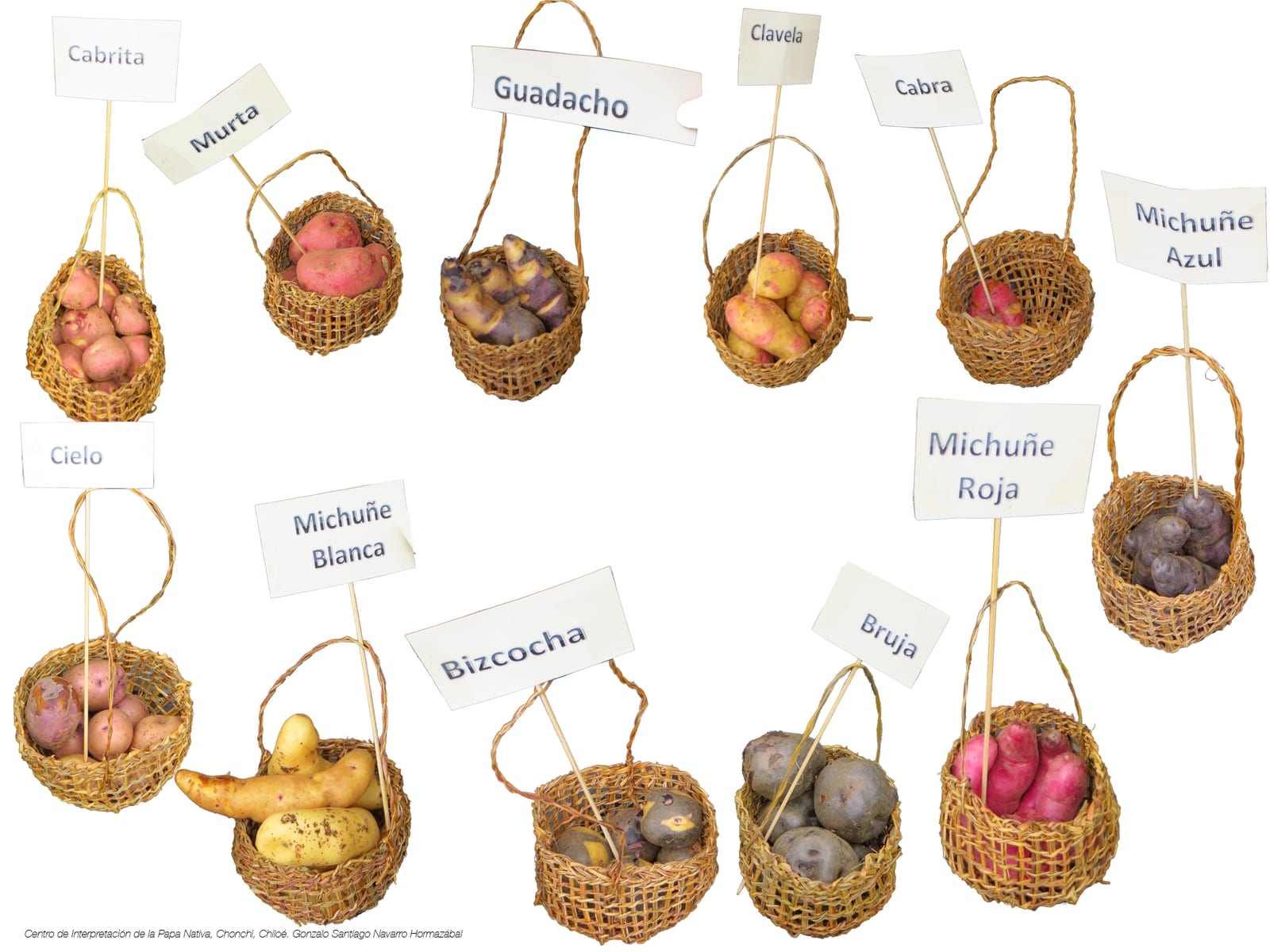
From a thousand varieties to two hundred and some
Before agricultural modernization there were between 800 and 1,000 cultivars. Today an estimated 250-odd remain. The loss had no single cause but several, and all of them are still at work.
- The introduction of improved seed, more productive and uniform.
- Late blight, the disease that wiped out entire crops.
- Lack of market: an unusual potato doesn't sell if nobody knows what it is.
- The salmon industry, which redirected the work of whole communities.
- Globalization, which standardized what gets eaten and how it's bought.
That's the point that interested me. A variety isn't lost because the plant disappears: it's lost when growing it stops making sense. And that happens when there's nowhere to sell it, nowhere to show it and nobody who knows how to cook it.
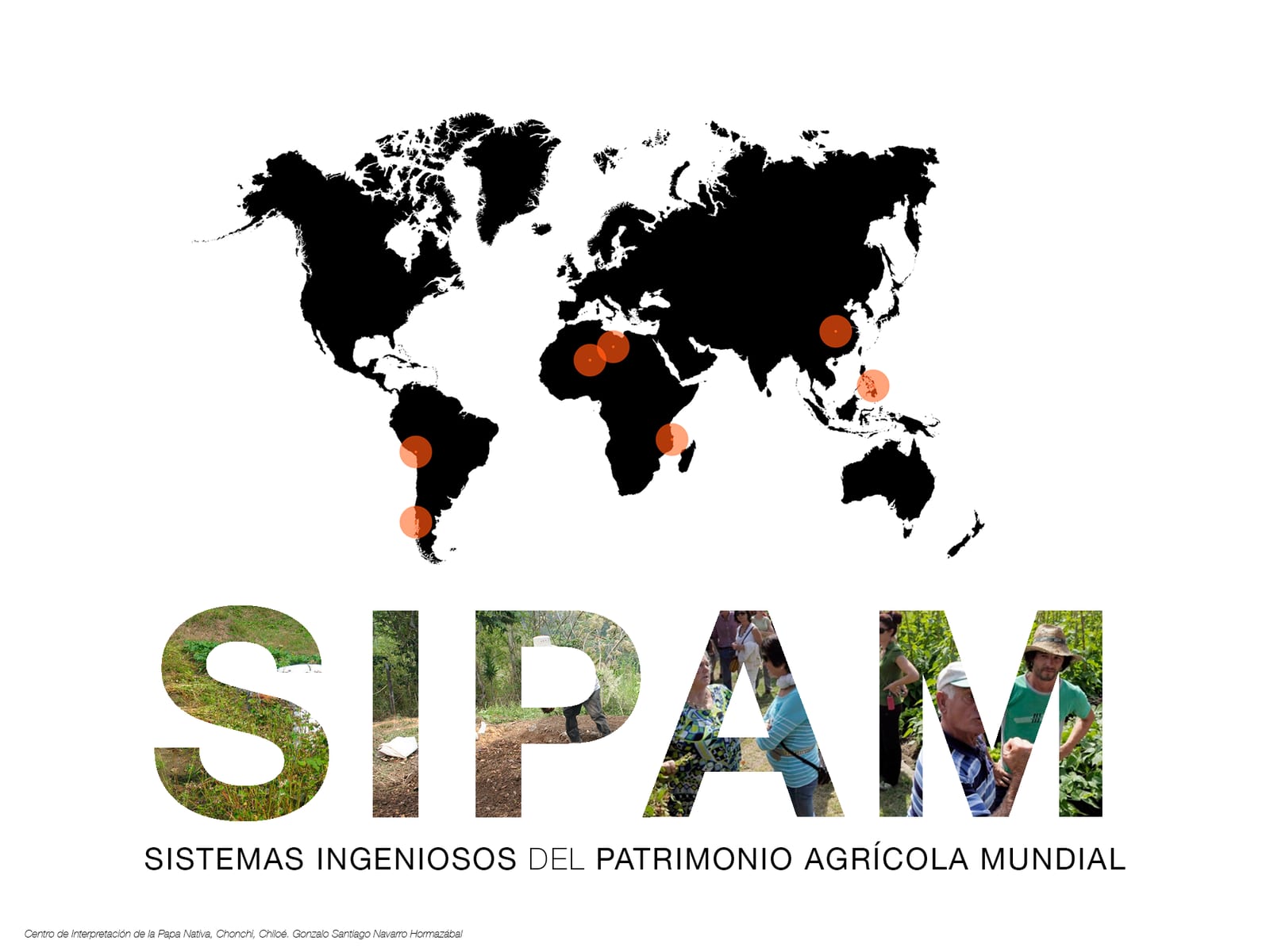
In 2011 the FAO recognized the archipelago as a Globally Important Agricultural Heritage System, the same category that distinguishes the rice terraces of the Philippines or the oases of the Maghreb. It isn't an award for a pretty landscape: it recognizes a farming system still in operation that holds genetic diversity the rest of the world lost.
Who keeps it alive
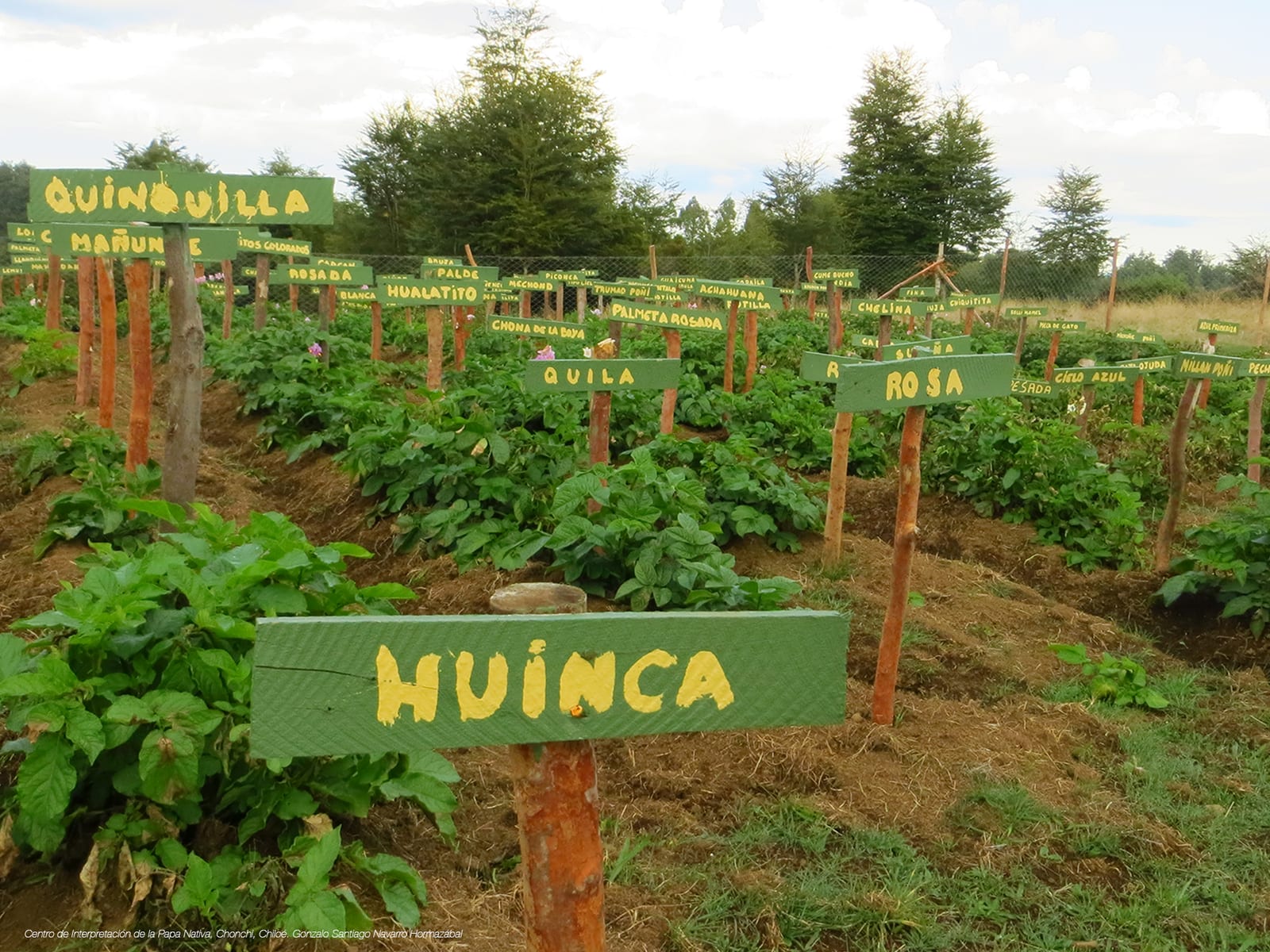
I grew up in Chonchi seeing fairs, curantos and sacks of potatoes without ever looking at them as a system. Only when I sat down to map it did what had always been in front of me come into focus: not a museum subject, a working network. Farming cooperatives selling to supermarkets, a garden holding over a hundred varieties kept by a nonprofit, fairs, ceremonies, community feasts.
The problem wasn't a lack of activity. It was that the activity had nowhere to happen. One cooperative met at its president's house because it could no longer afford a venue. The variety garden sat on borrowed land. Every initiative existed through someone's willpower, with no place holding them up.
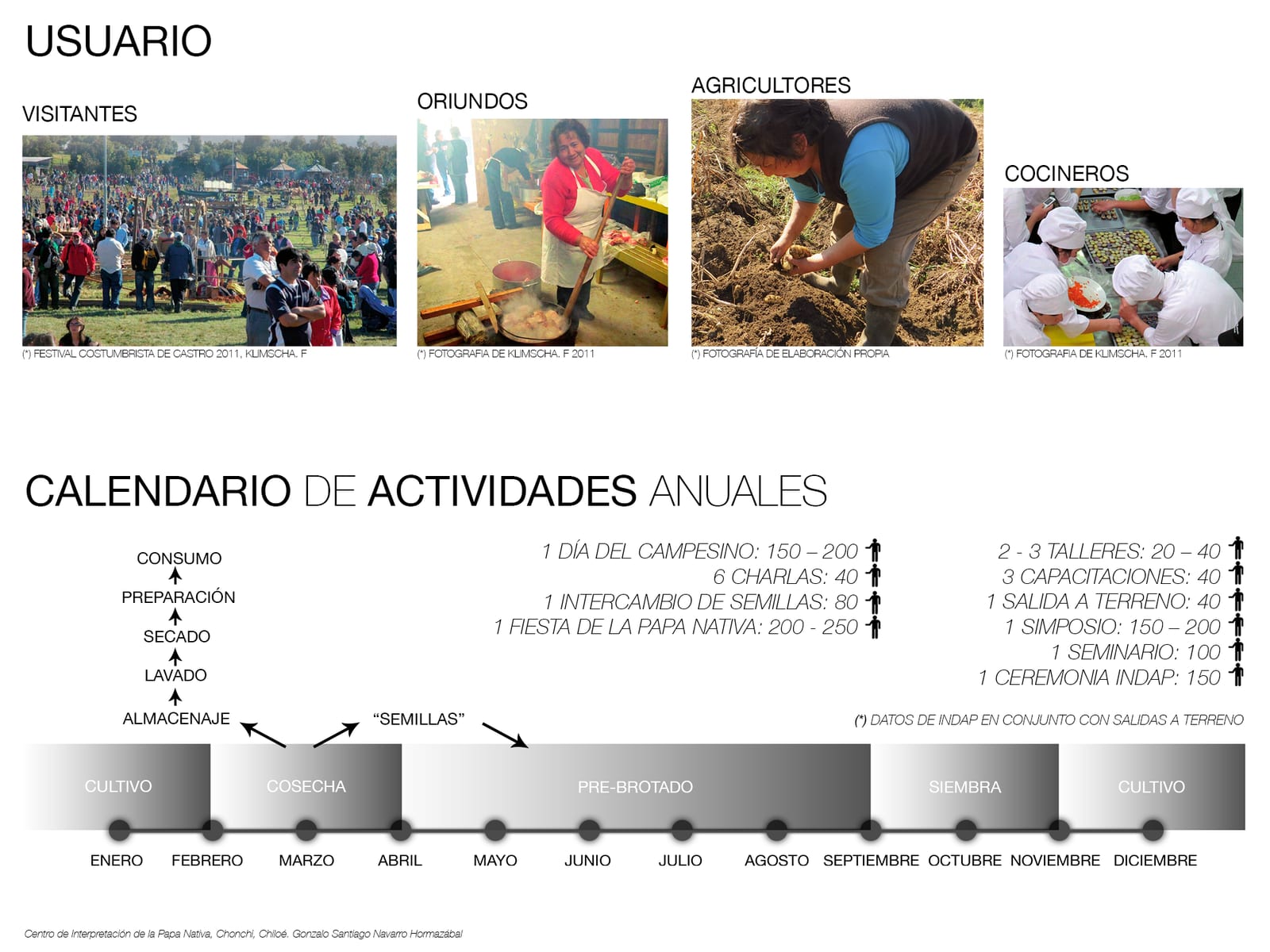
I mapped the full year and something useful appeared: the activities aren't spread at random, they follow the agricultural cycle. There are months for harvest, months for drying, months for selecting seed. Any place meant to serve them has to breathe at that rhythm, not at the pace of an urban cultural program.
The architecture the potato made
Here's what I didn't expect to find, and what ended up being the heart of the research. On Chiloé, growing potatoes generated its own building types, and nobody looks at them as architecture.
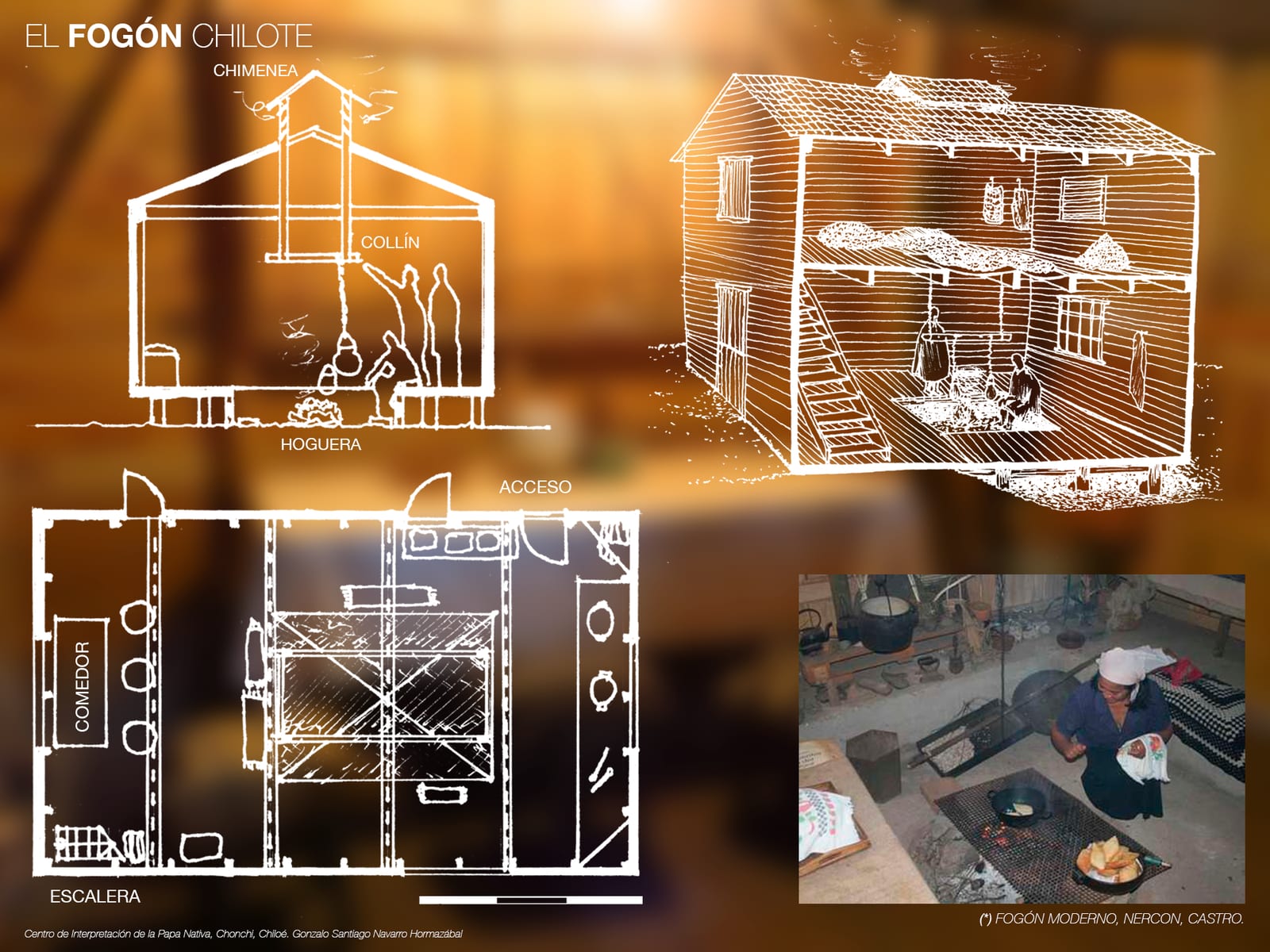
The old Chilote house was organized around a hearth kitchen, where nearly the whole day took place. Cooking happened in pots hung from chains descending from the beams, or straight on the embers. And above the fire, in the roof space, wheat, garlic and potatoes were kept: the smoke preserved them and gave them a sweet flavor.
Then came the fires and the wood stove. The kitchen consolidated without a hearth, and the hearth separated from the house into its own volume. With refrigeration, smoking was no longer needed. From that separation two new types were born: the storage shed, which keeps, and the quincho, which is the hearth without its pantry role.
The shed attached to the Chilote house has been central to island life, and yet it isn't studied the way the churches or the stilt houses are.
The troja
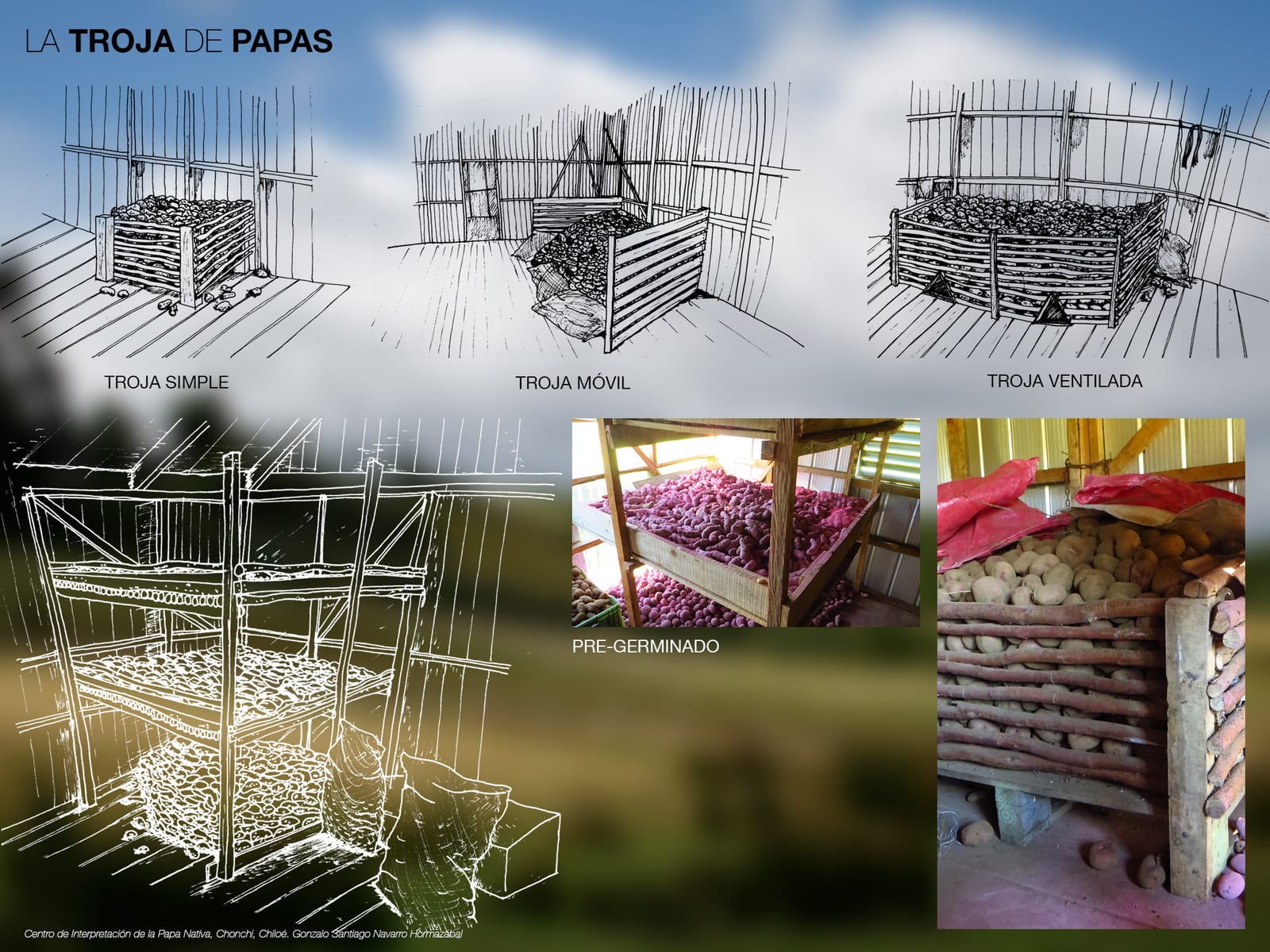
The most interesting piece is the troja: a timber structure for storing potatoes that solves with geometry what today we'd solve with machinery.
The floor is a platform of battens spaced about three centimeters apart, so air moves from below. The walls repeat the spacing. And when the volume is large, triangular ventilation ducts appear every meter and a half, sized at thirteen square centimeters of section per ton stored.
A cubic meter of troja holds around 700 kilos of potatoes, and the system keeps them more than six months with minimal losses to rot. No electricity, no temperature control, nothing but air moving where it should. It's a machine made of wood.
Beside it sits the seed rack, where the farmer picks next year's tubers. That one is built in terraces with large openings from roof to floor, because each potato needs light to sprout evenly. Two adjoining rooms, two different geometries, each derived from a biological requirement.
The almud
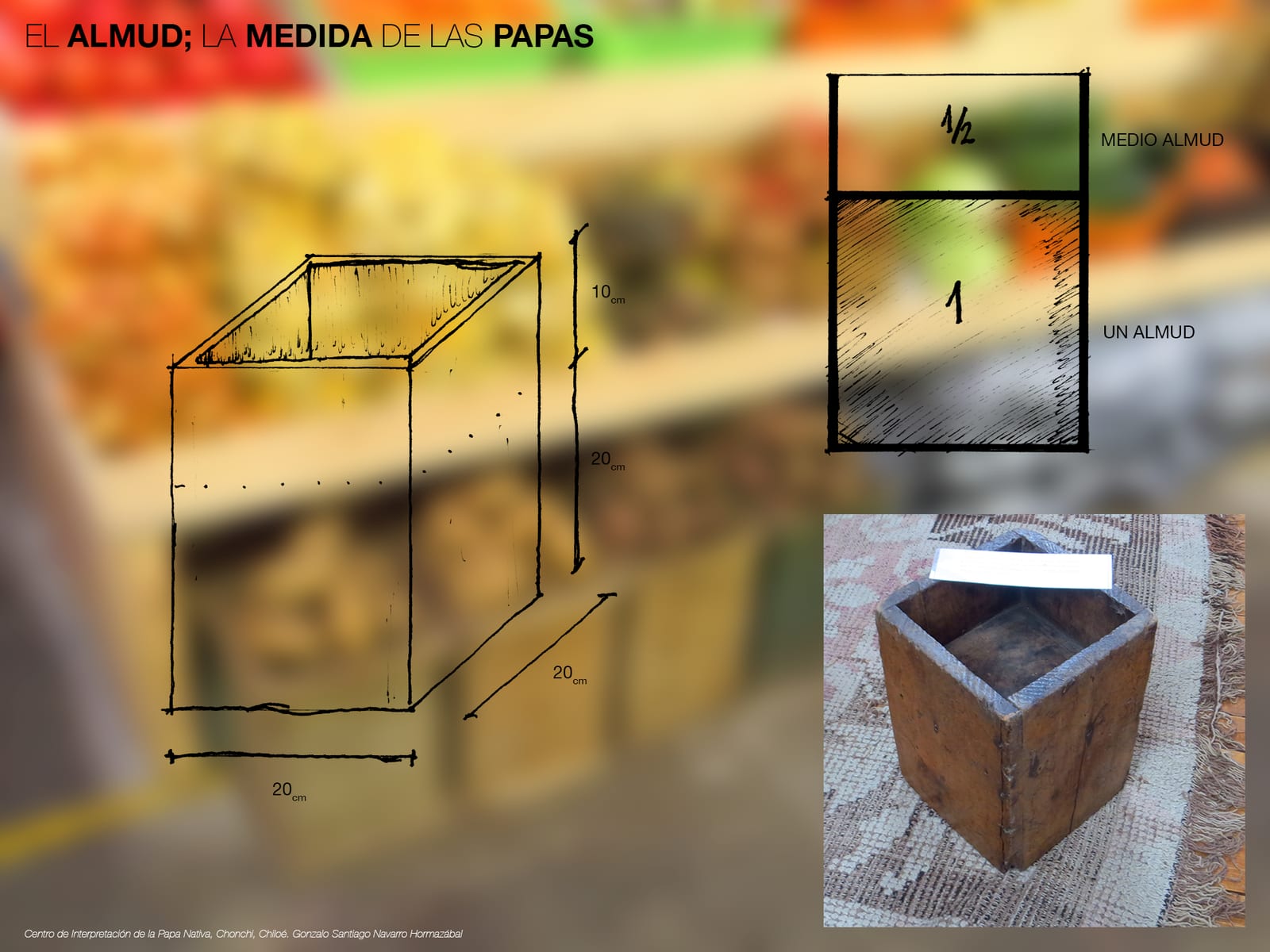
And there's the almud, the wooden box potatoes have been measured with for generations. It isn't a container: it's a unit. You sell by the almud, you reckon the harvest by the almud, you talk in almudes.
I kept that object because it condenses everything else. A simple box that defines a measure, a price and a way of counting. When I later had to name the main building of the project, that's what it was called.
Rural, urban, domestic
Sorting the material, a structure of three worlds appeared, and each has its own architecture:
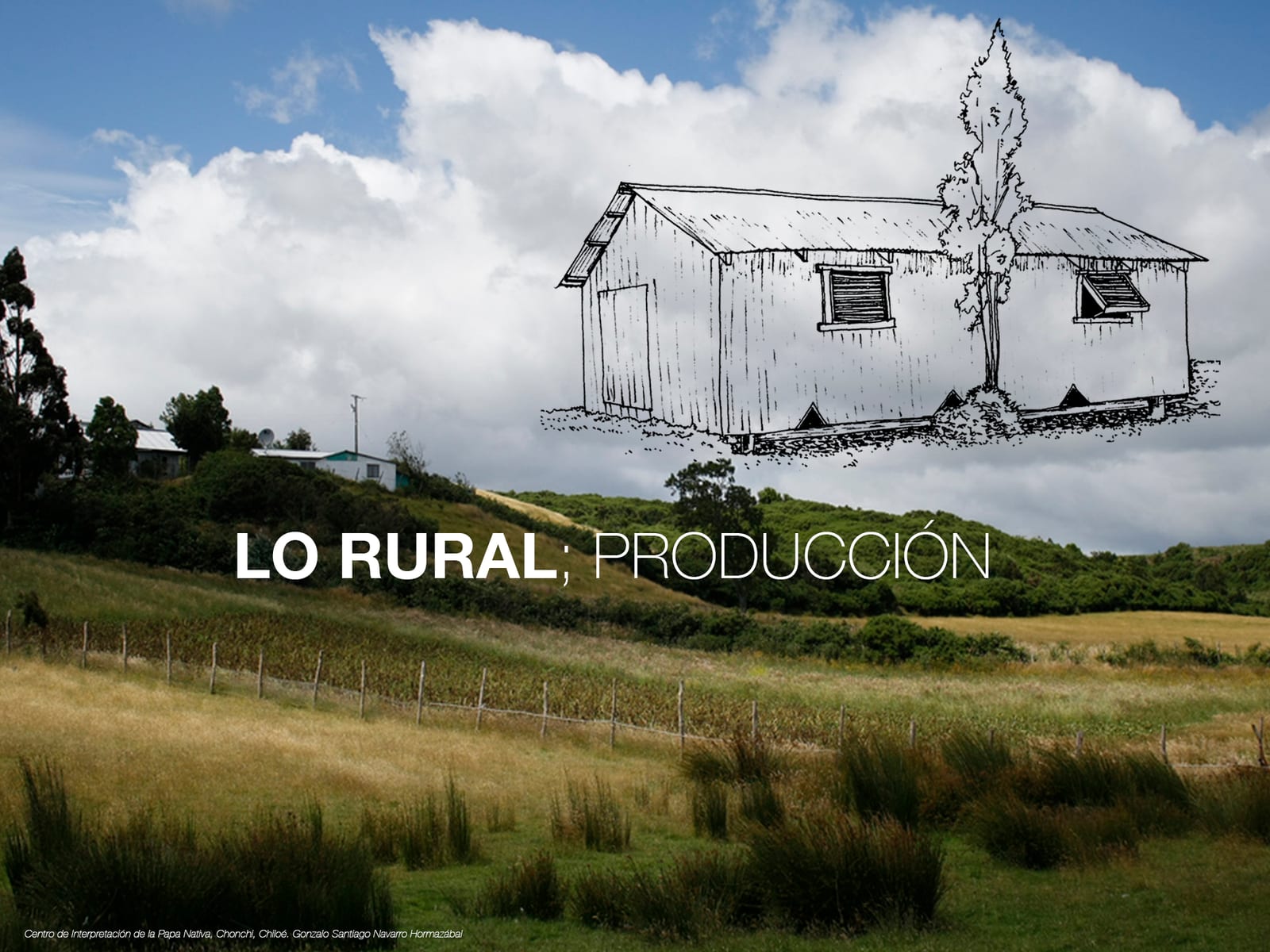
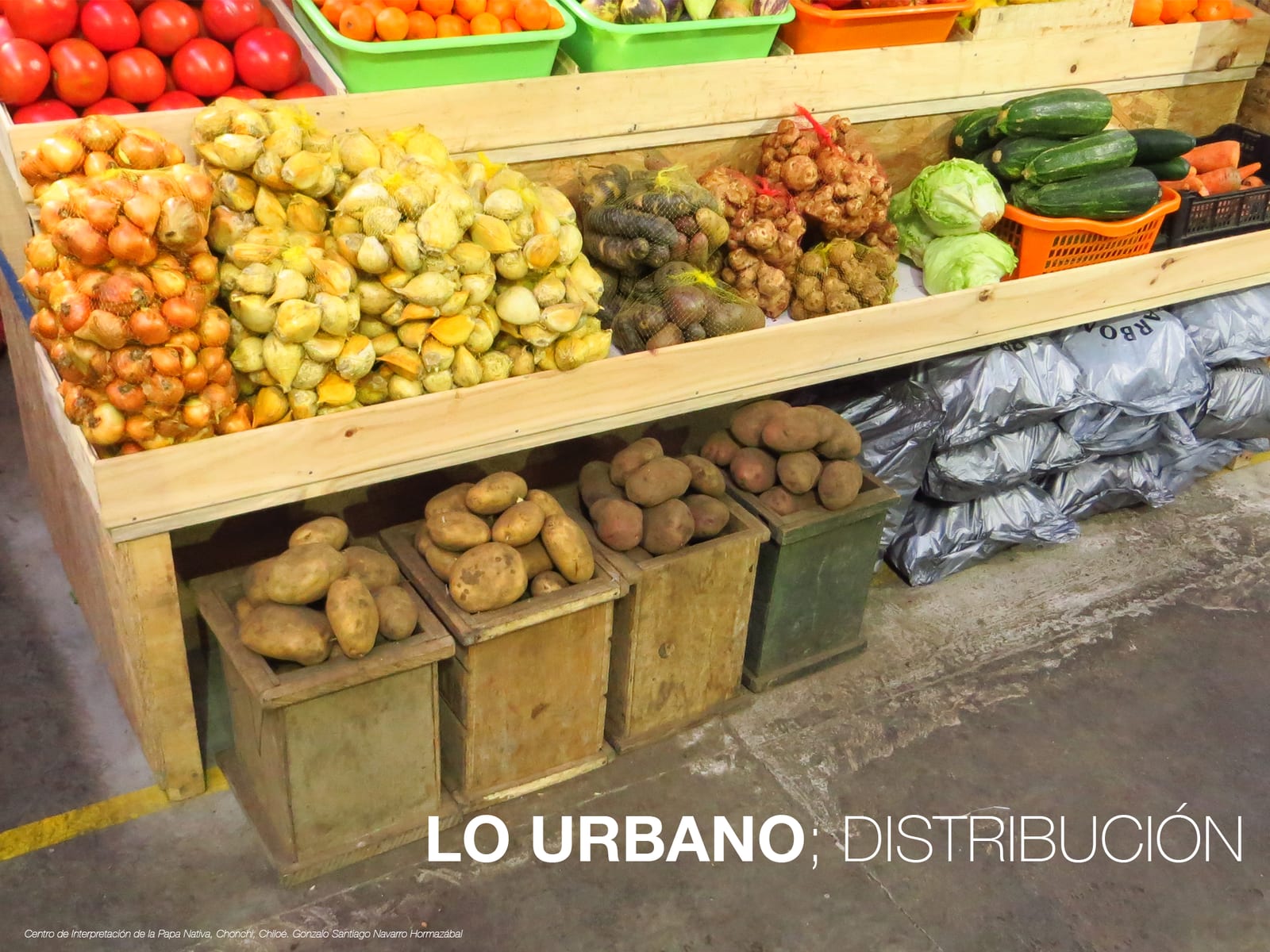
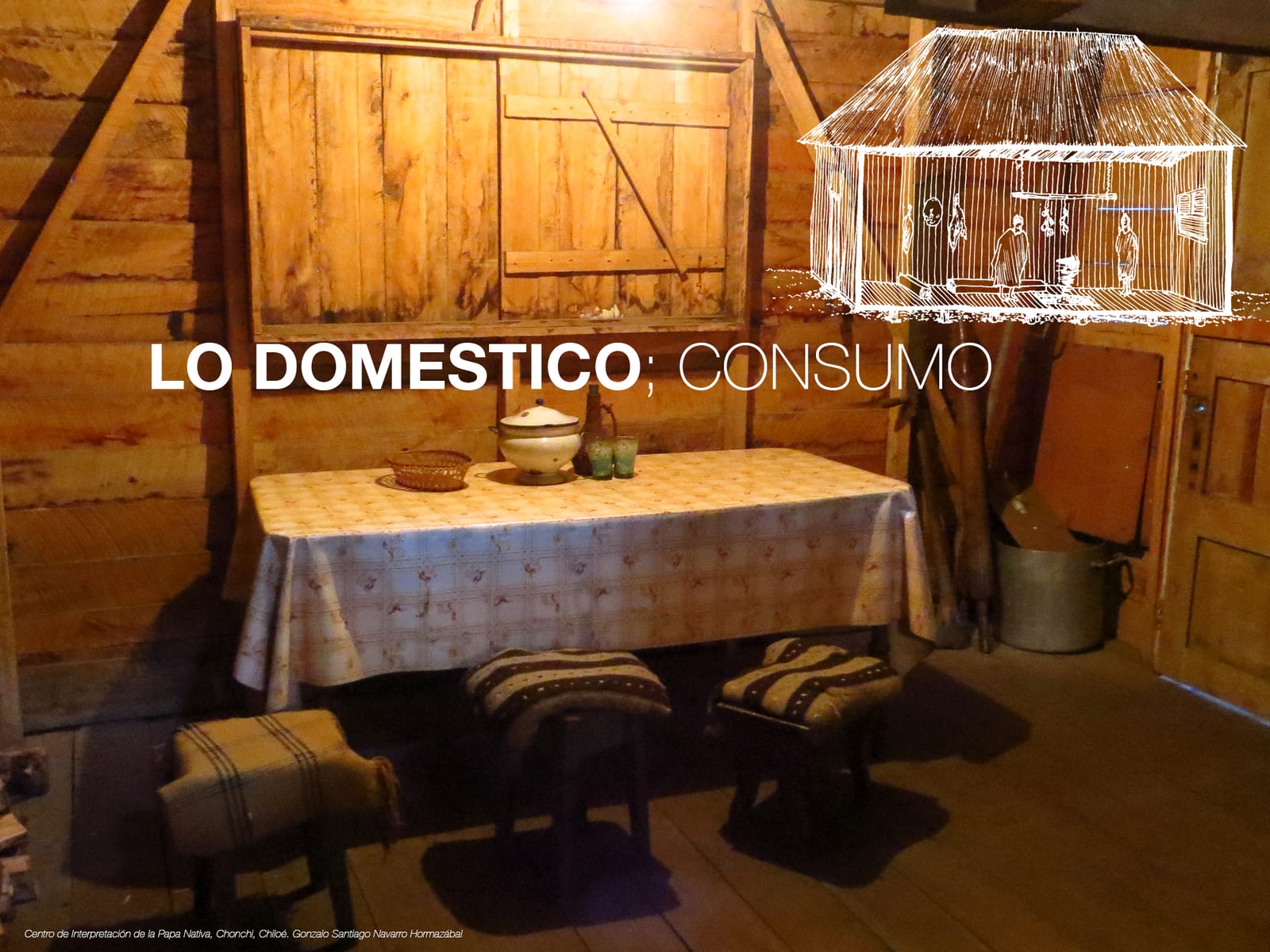
The rural is production and storage: the troja, the seed rack, the shed. The urban is distribution: the stall, the market, the pier the shipments left from. The domestic is consumption: the hearth, the pot, the table.
Between those three worlds there's a gap. The native potato is grown in the countryside and eaten at home, but it lacks the middle place where it can be shown, taught, sold well and researched. That gap became the project's hypothesis.
Why Chonchi
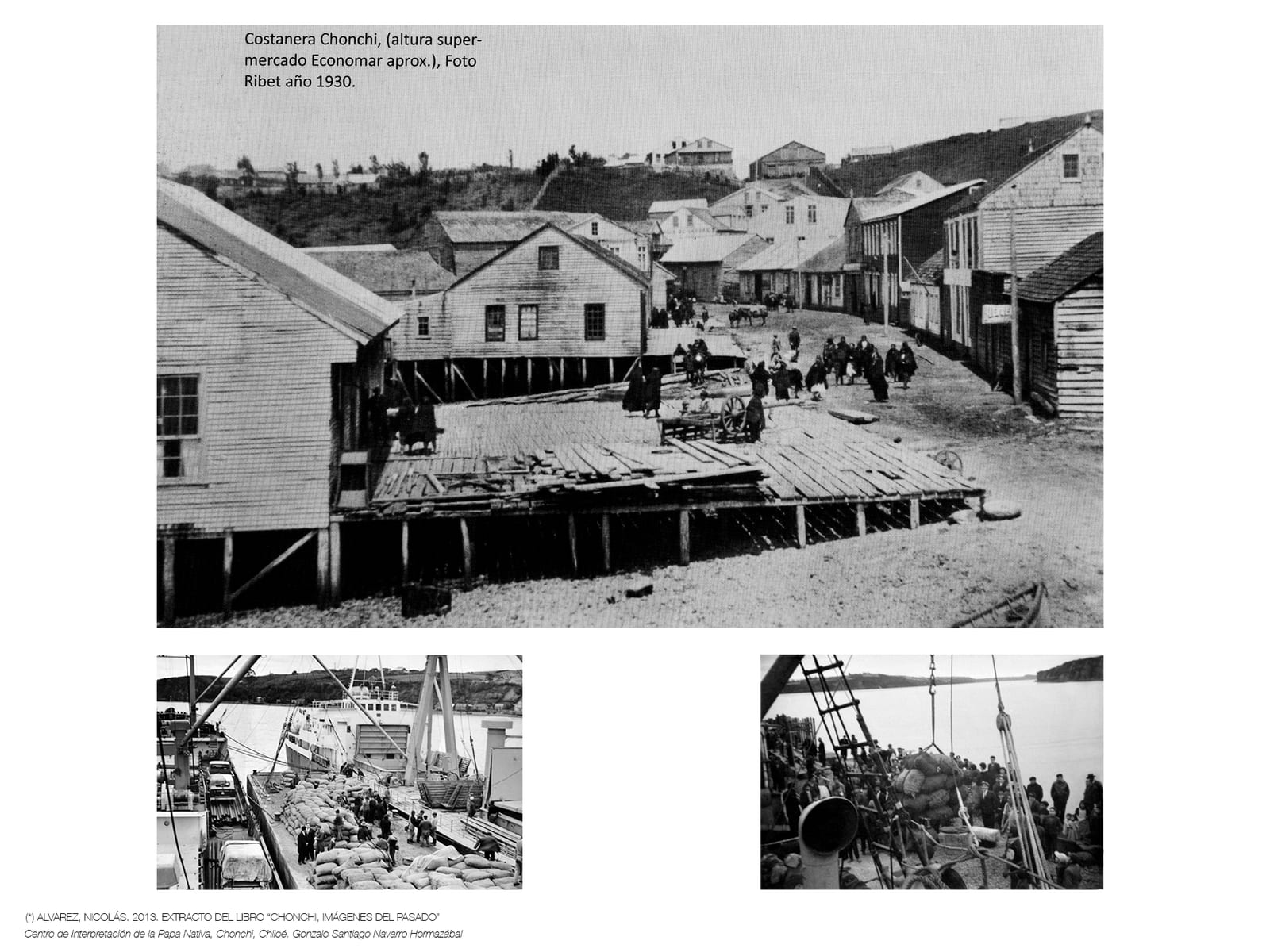
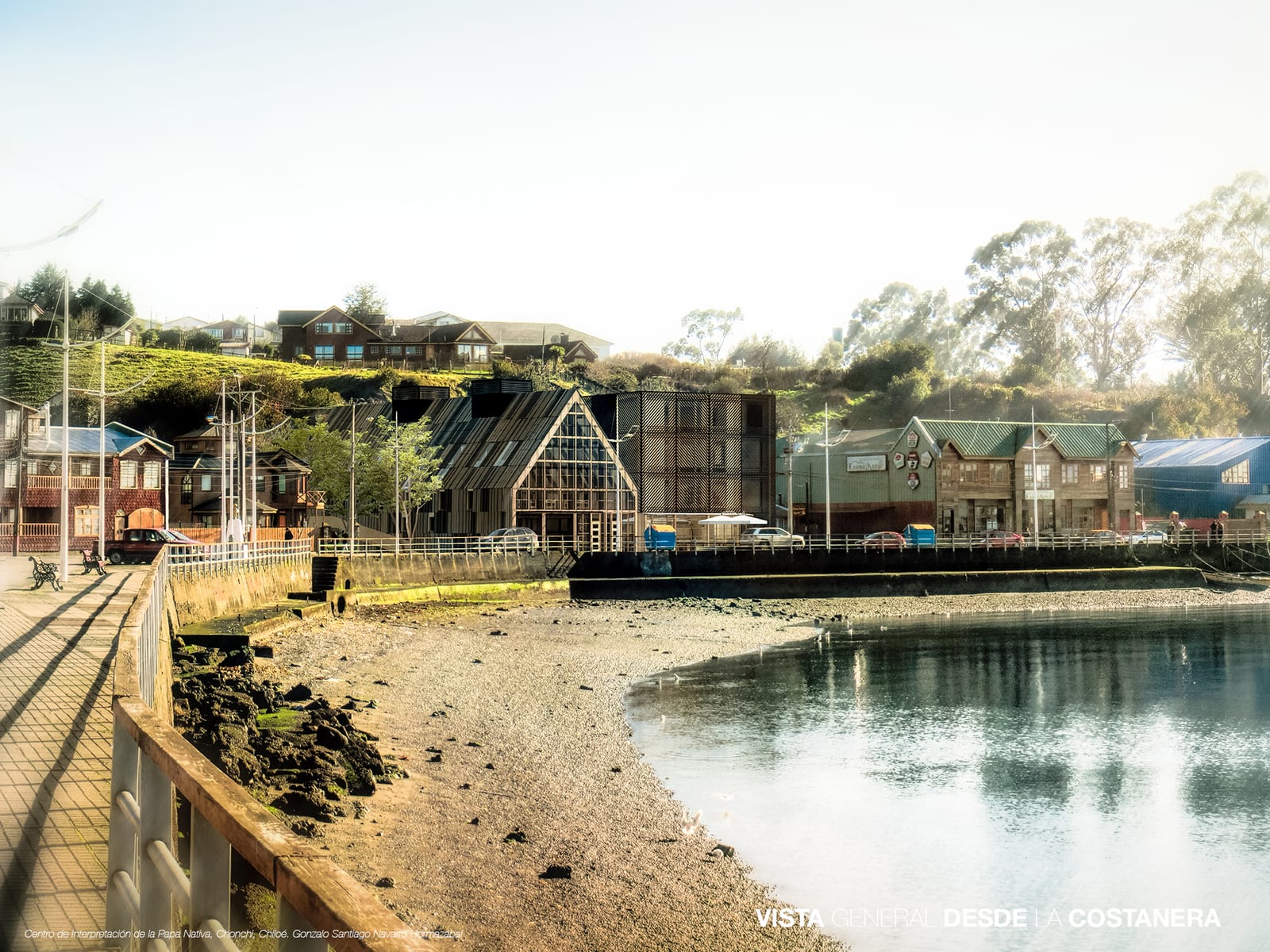
Where to place it came down to two options: the countryside or the town. I chose the town, and within it Chonchi, for a reason the photograph explains better than I can.
Chonchi's waterfront received and stored, in large warehouses on stilts, the potato shipments that were later exported by boat. It was a living edge, busy all day. That movement was lost with the 1960 earthquake and the changes that followed.
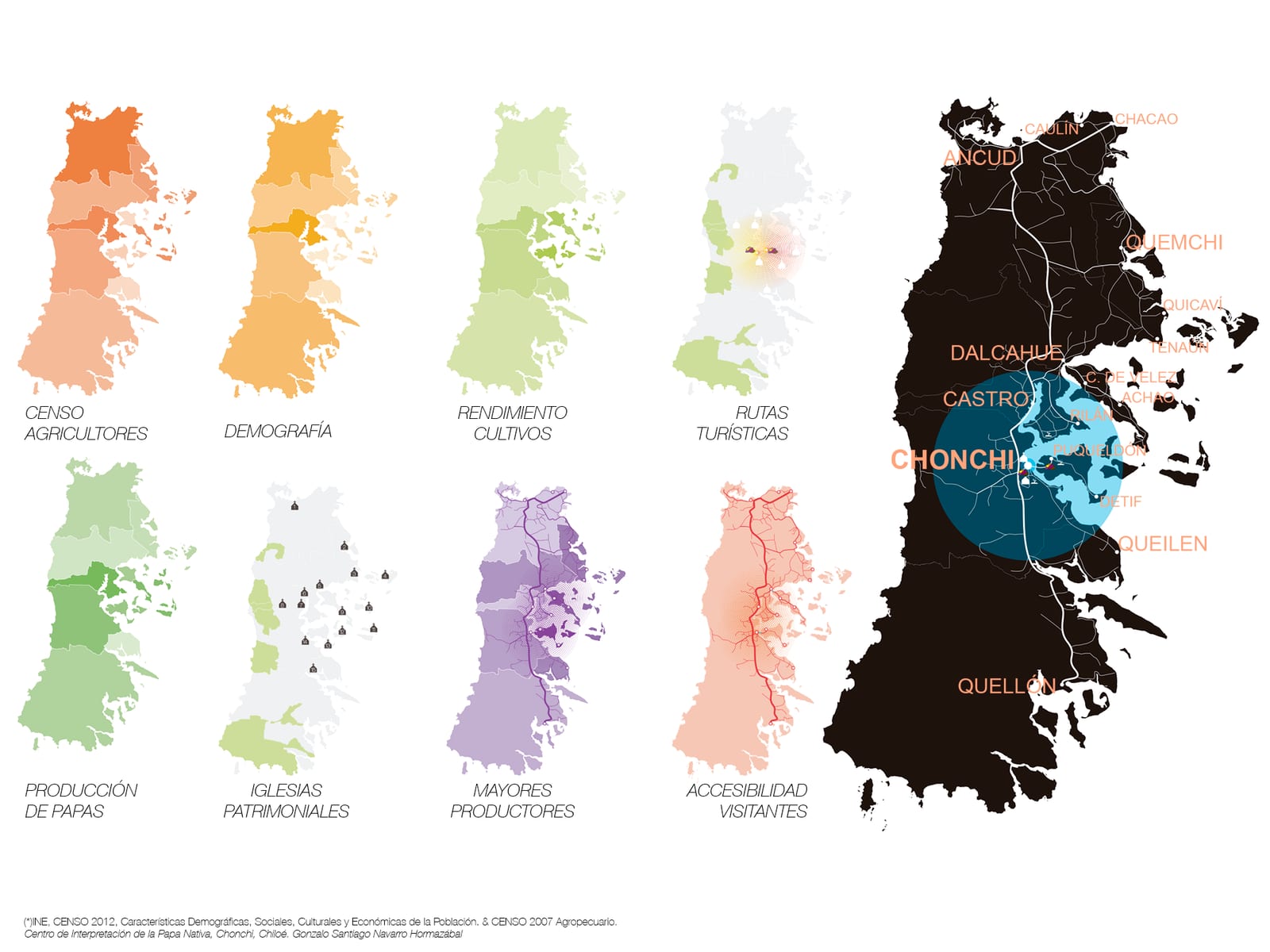
The choice wasn't intuition. I compared the archipelago layer by layer —potato production, yield, accessibility, heritage roots, tourist routes— and Chonchi came out well positioned in all of them without leading any, which for a meeting place is exactly what's needed.
That way of deciding —define the criteria, measure them separately and let the conclusion come from the data rather than from preference— is the one I kept using afterwards, with algorithms in the mix. I develop it in Data Driven Design.
What stayed with me
I finished the thesis convinced of something I still believe: vernacular architecture isn't decorative, it's technical. The troja isn't picturesque, it's a calculated preservation system. The hearth isn't folklore, it's the answer to preserving food without refrigeration.
When those solutions are studied as seriously as a contemporary ventilated façade, answers appear that have been tested for centuries. The difference is that nobody patented them.
Ideas and learnings, once a month.